
Proprietary blend
Melonex Proprietary Blend: What the 500 mg Line Does and Does Not Tell You
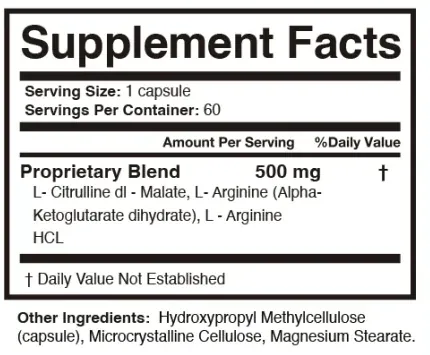
The Melonex Proprietary Blend is one 500 mg line that covers L-citrulline dl-malate, L-arginine alpha-ketoglutarate and L-arginine HCL. Federal labeling rules require the names in order from most to least by weight, but not the individual amounts. That order caps the first name at no less than 167 mg and the other two at no more than 250 mg and 167 mg.
Written by the Melonex label deskUpdated
What is a proprietary blend?
A proprietary blend is a group of ingredients listed under one total weight. The rule that created the term lets a maker leave out the amount of each ingredient, as long as the total and the order are shown.
The federal rule is 21 CFR 101.36. It says a blend is identified by the term "Proprietary Blend" or a similar name, that the total weight of the blend is declared, and that the ingredients in it are listed in descending order of predominance by weight 1. Nothing in the rule asks for a per-ingredient amount.
Brands use blends for two reasons. One is to guard a recipe from copycats. The other, less often said, is that a single total looks tidy and hides how small one of the amounts may be. The Melonex label uses the heading "Proprietary Blend" with a dagger note, "Daily Value not established", and the three names under a 500 mg total.
- 1L- Citrulline dl - Malate167 mg or more of the 500 mg blend
- 2L-Arginine (Alpha-Ketoglutarate dihydrate)under 250 mg of the 500 mg blend
- 3L - Arginine HCLunder 167 mg of the 500 mg blend
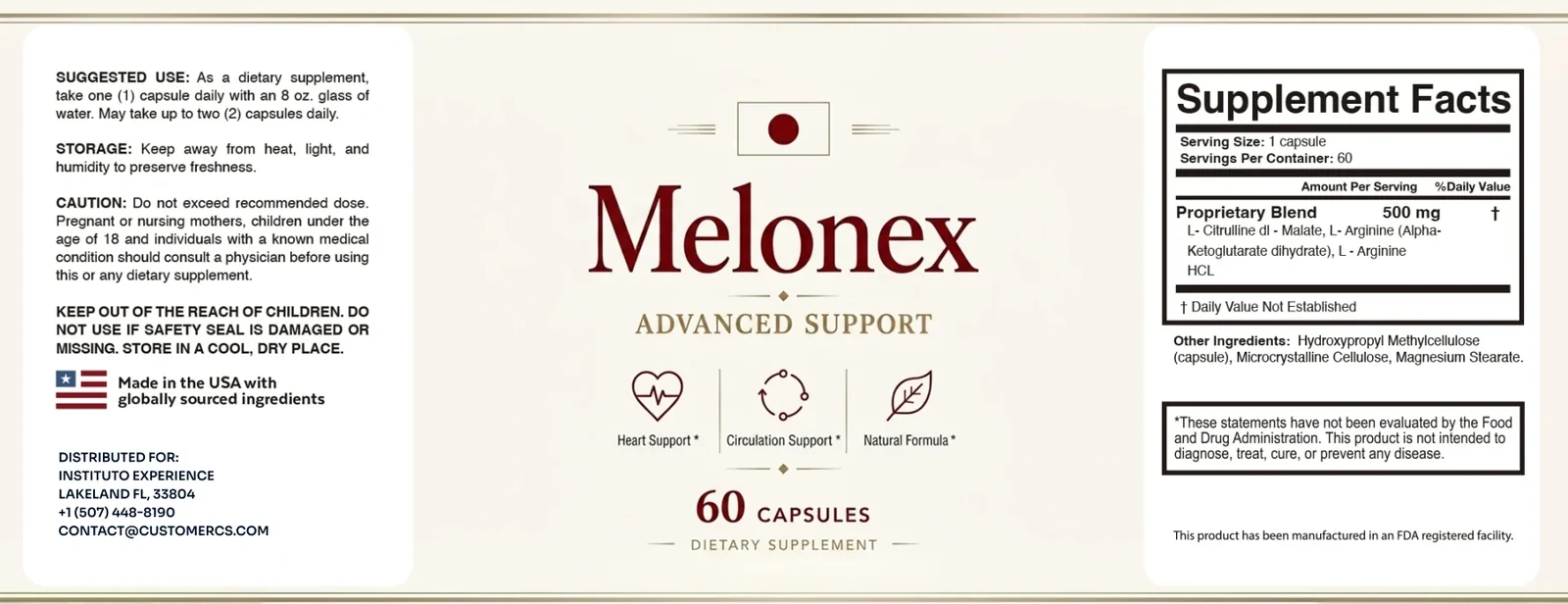
From the Supplement Facts panel, in label order. The label prints 500 mg for the whole Proprietary Blend and no amount for any name, so the limits shown come from the order alone. Other ingredients (hydroxypropyl methylcellulose capsule, microcrystalline cellulose, magnesium stearate) are not part of the blend.
What can you work out from the label order?
Order gives a ceiling for each name after the first, and a floor for the first. It is arithmetic, and it does not need any lab test.
If the three names sum to 500 mg and are listed from most to least, then the first name must be at least a third of 500 mg, which is 167 mg. The second cannot be bigger than the first, so it is at most half of 500 mg, which is 250 mg. The third cannot be bigger than the second, so it is at most a third of 500 mg, again 167 mg.
The ranges for the lower end are wide. The first name could be anywhere from 167 mg to almost 500 mg. The label order does not say how fast the amounts fall off between names.
What are the possible ranges?
The table gives the ceiling and floor the order sets for each name. The last column shows what researchers used in studies, which is very different.
| Name on the label | Place | Amount printed | What the label order allows (per capsule) | Amount used in research | Evidence |
|---|---|---|---|---|---|
| L- Citrulline dl - Malate | 1 of 9 | Not printed | 167 mg or more, under 500 mg | 3 to 8 g (3,000 to 8,000 mg) a day of citrulline for 1 to 16 weeks 4 5 6 2 7 | Small average systolic drops in pooled trials, no effect in one analysis; small, low-certainty exercise benefit |
| L-Arginine (Alpha-Ketoglutarate dihydrate) | 2 of 9 | Not printed | under 250 mg | 4 g per dose, 12 g a day, in one sports trial of 35 men 3 8 9 10 11 12 | Little human evidence; one review says clinical evidence is lacking |
| L - Arginine HCL | 3 of 9 | Not printed | under 167 mg | Pooled trials of L-arginine alone mostly used grams a day; no further change above 9 g a day 10 11 12 13 14 | Small average drops in pooled trials of arginine alone; Mayo says it might help, MSK calls the evidence mixed and limited |
The studied amounts are in grams per day, the label is in milligrams per capsule. Even at two capsules a day, the entire blend is 1,000 mg, which is 1 gram 14.
What can you not know from the bottle?
You cannot know the amount of any single amino acid, the ratio between the two arginine forms, or whether the batch matches the label.
- The exact milligrams of citrulline, arginine AKG and arginine HCl.
- Whether the first name is 167 mg or 400 mg.
- The elemental arginine, since the AKG and HCl parts add weight that is not arginine.
- The assay: the label does not say that a lab tested the capsule against the claim.
- Who makes it: the label names a distributor, not a factory.
The sales site says the product has "high-purity, naturally derived ingredients" 15. That is a description, not a test. A third-party seal such as USP's verification program is voluntary, and we found no such seal on this product 16.
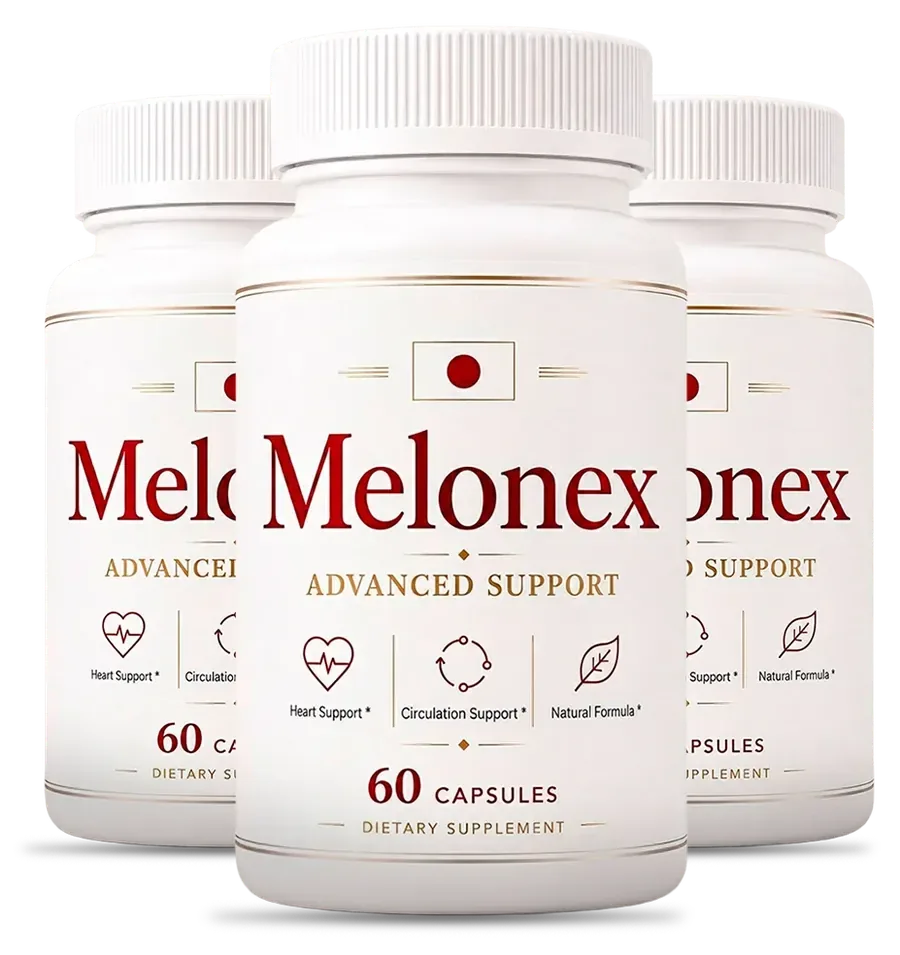
Melonex: from $49 a bottle60 capsules · 2, 3 or 6 bottles · free US shipping on 3 and 6 · 60-day money-back guarantee
See packsWhich questions can you send to the brand?
You are allowed to ask, and a good brand can answer without giving up its recipe. These five questions are fair.
What is the amount of each ingredient?
Ask for milligrams per capsule for each of the three names, in writing.
Is there a certificate of analysis for my lot?
The sales page quotes a lot and CoA reference. Ask for the file itself and who issued it.
Who makes it?
The label says made in an FDA registered facility. Ask for the facility name.
Is it third-party tested?
Ask which lab and which method, and whether it is a USP or NSF program.
Is there a maximum safe daily dose?
The label allows two capsules a day. Ask whether that was tested.
Contact details are on the contact page. If the answers are vague, treat that as information.
Is a blend a red flag?
Not by itself. A blend is legal and common. It becomes a problem when the amounts are hidden and the claims are strong.
For Melonex, the claims are soft and starred, and the list order is declared. That is more than some labels give. What is missing is an amount and a lab. Read the testing and quality page for what is and is not shown, and the legitimacy page for the overall picture.
FAQ01
Melonex questions people ask
What is the Melonex proprietary blend?
It is a 500 mg line on the label that holds L-citrulline dl-malate, L-arginine alpha-ketoglutarate and L-arginine HCL, listed from most to least by weight. The label does not print the amounts of the three.
Is a proprietary blend legal?
Yes. Federal rules let supplement makers list a blend under a single total, as long as the names are in order of weight. FDA does not review blends before sale.
How much citrulline is in Melonex?
At least 167 mg, going by the label order, because it is listed first. It could be much more. The exact amount is not printed.
How much arginine is in Melonex?
Two of the three names are arginine forms. Together they can be at most 333 mg of the 500 mg, and some of that weight is the AKG or HCl partner, not arginine. The exact amount is not printed.
Why do brands hide amounts?
Brands say they protect their recipe. Critics say it also hides small amounts. Either way, the rule allows it, and you should ask the brand for the numbers.
Does 500 mg match what studies used?
No. Studies of arginine and citrulline used grams a day, often 3 to 9 g for citrulline. A capsule of 500 mg total is a fraction of that, so study results do not carry over to it.
Who wrote this02
Written and reviewed by
Pages built from the label, the sales page and linked NIH, FDA, CDC, FTC and peer-reviewed sources.
Last updated . Read our editorial standards and how we check reviews. This website is the information site for a USA Authorized Melonex Retailer. It is not the manufacturer or the distributor named on the label. We earn money when you buy through our order links.
Keep reading
More about Melonex
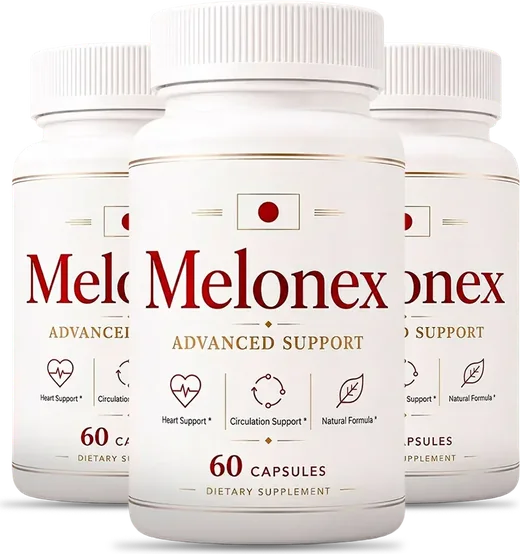
USA Authorized Melonex Retailer
Ready to try Melonex?
Check your medicines first, especially blood-pressure medicine, then pick a pack. Six bottles cost the least per bottle; three and six ship free in the US; every pack carries the 60-day money-back guarantee.
- Secure checkout on the sales site
- 60-day money-back guarantee
- Ships from the U.S.